


1 in 4 Americans Plan to Cut Donations in 2026, Survey Finds


One in four Americans said they plan to reduce their charitable giving in 2026, even as broader economic indicators show signs of improvement, according to a new national survey from Church Mutual.
The “2026 Charitable Giving in America” survey, conducted in December 2025 among 1,010 U.S. adults who donate to nonprofits, schools, or houses of worship, found that 25% of respondents expect to cut back on charitable donations in the year ahead. Another 48% said they expect their giving to remain unchanged.
The findings highlight a challenging reality for nonprofits heading into the new year: While donors remain engaged, many are still financially cautious — and increasingly selective — about how and when they give.
“Over the past year, many nonprofits have navigated funding uncertainty, which has increased the need for private philanthropy through individual donations,” Elisabeth Aleman, assistant vice president of nonprofit and human services at Church Mutual, said in a statement. “However, what we’re starting to see is that although economic indicators are gradually improving, donors are still cautious and protective of their finances. At the same time, nonprofits continue to see elevated demand without much change in resources, which means they’re doing more with less.”
Here’s a closer look at the study’s findings and what they mean for nonprofits.
Donor Caution Remains as Economic Signals Improve
As inflation eases in some areas and economic conditions stabilize, many households said they have yet to feel meaningful relief.
More than six in 10 respondents (61%) cited the rising cost of everyday goods and services as their top financial concern, followed by worries about worsening economic conditions or a potential recession (46%). Meanwhile, a third said they worry about making routine debt payments, and another third expressed concern about their ability to give to the charitable causes they care about. That tension underscores a growing divide between donor intent and donor capacity.
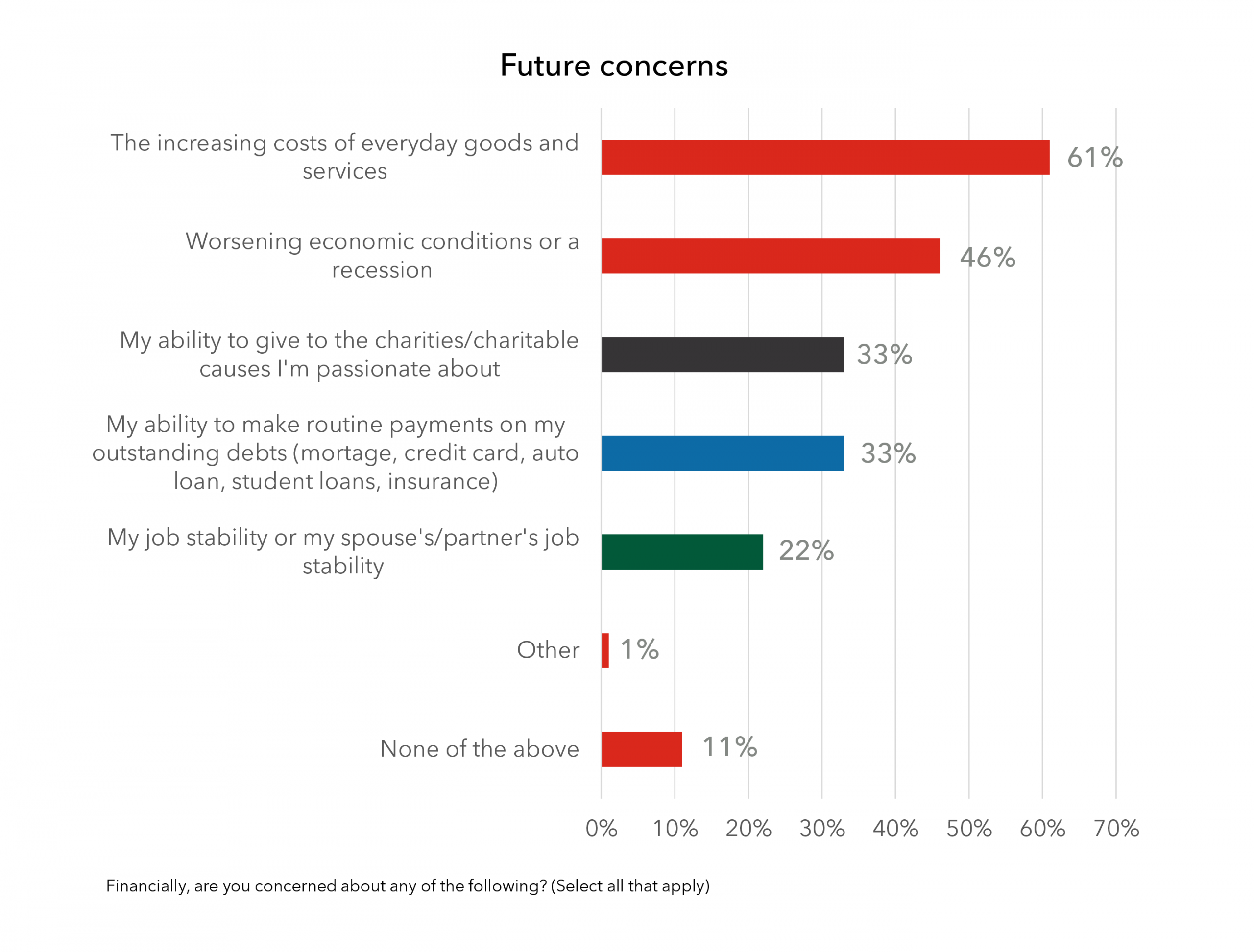
Rising everyday costs are donors’ top financial concern, followed by fears of worsening economic conditions — factors contributing to continued caution around charitable giving in 2026. | Credit: "2026 Charitable Giving in America" by Church Mutual
Donors’ concern is not limited to their own finances. More than half of respondents (54%) said they are worried about the financial health of the organizations they support — a reflection of the growing awareness of the strain nonprofits face as funding uncertainty collides with rising service demand.
Year-End Giving Still Matters, But Most Donations Happen Outside December
While the final months of the year remain the most popular quarter for charitable giving, the survey showed that donor activity is spread across the calendar.
About 43% of respondents said they donate most often between October and December. Baby boomers were the most likely (58%) generation to favor the year-end time frame. That number dropped to roughly a third for younger generations. Millennials were nearly as likely to give in the first or second quarter as they were at year-end. Meanwhile, Generation Z donors were still most likely to give at year-end, but they sustained generosity through the first three quarters of the year — albeit at a lower rate.
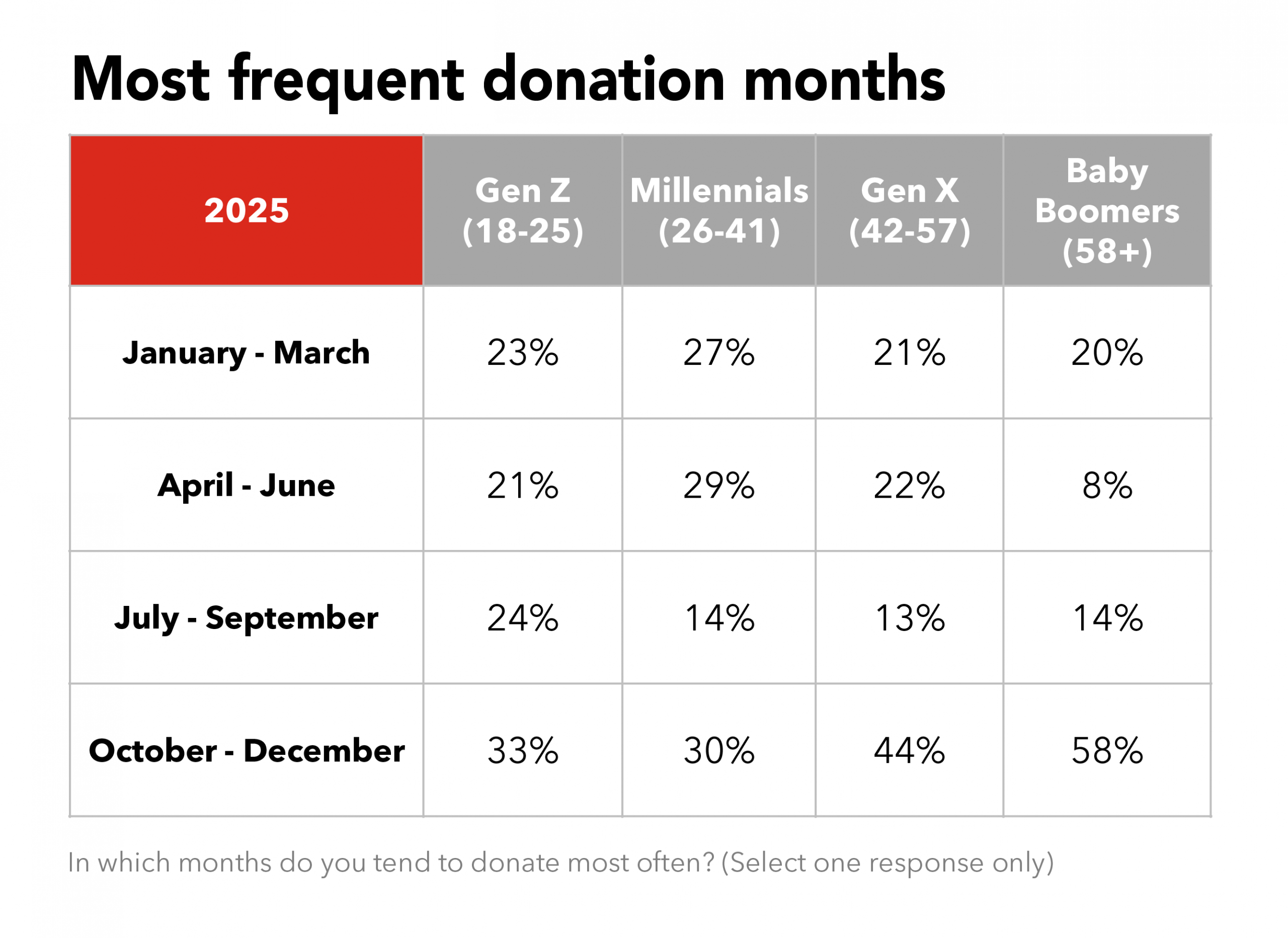
Most donors give later in the year, with 43% reporting October through December as their most frequent donation period, according to the 2026 Charitable Giving in America survey. | Credit: "2026 Charitable Giving in America" by Church Mutual
The data reinforces a broader shift nonprofits are already grappling with: Year-end campaigns remain critical, but they are no longer the sole driver of donor engagement. Recent NonProfit PRO survey data reflects that shift. In 2025, more than four in 10 nonprofits reported that just 1% to 20% of their fundraising revenue came from year-end giving campaigns, while the share of organizations reporting no reliance on year-end giving at all has increased since 2020.
Reduced Donations Don’t Necessarily Mean Reduced Engagement
Even when donors expect to give less financially, many said they plan to stay involved in other ways.
Nearly six in 10 respondents (58%) said they would be likely to increase their time or effort — through volunteering, advocacy, or other forms of engagement — if they reduce monetary donations. Younger donors were especially likely to say they would replace financial giving with increased involvement, indicating there are opportunities for nonprofits to deepen relationships beyond fundraising alone.
Additionally, 41% of respondents said giving to charity was a monetary priority. That was particularly the case among millennials (44%) and baby boomers (42%).
What This Means For Nonprofit Leaders in 2026
These findings arrive as nonprofits continue to explore ways to encourage giving amid donor caution.
Existing tools — such as charitable deductions, qualified charitable distributions for older donors, and employer-supported giving programs — may help offset some fundraising pressure when paired with clear communication and year-round engagement strategies. As giving becomes more evenly distributed across the calendar, nonprofits may need to align tax-aware messaging with campaigns outside of traditional year-end appeals. After all, tax deductions became available for taxpayers who do not itemize for the 2026 tax year.
Regardless, it’s important to remember that donors are still giving. However, they are cautious, cost-conscious, and increasingly intentional, so fundraising growth may remain challenging, even as economic headlines improve. The data supports nonprofits asking year-round, diversifying engagement strategies, and communicating clearly about impact and financial stability.
- Categories:
- Annual Campaigns
- Individual Giving
- Companies:
- Church Mutual Insurance Company, S. I.
- People:
- Elisabeth Aleman


