Average American Donor Thinks They Give More Than They Do


Fundraisers spend a lot of time listening closely to donors talk about what comes next — whether they expect to give more, less, or about the same amid continued economic uncertainty.
New data suggests another reason giving may remain flat. Many donors already believe they are giving generously — even as actual generosity continues to decline.
Grey Matter Research & Consulting surveyed more than 1,100 charitable donors nationwide to understand how much the average American donor actually gives, how donors perceive their generosity, and why many feel little urgency to increase their support. The findings of “The Average American Donor: Far Less Generous Than They Think” help explain why donor intent doesn’t always translate into increased giving.
What Donors Think They Give
On average, donors believe they give about 4.6% of their household income to charity. In reality, the average donor gives just 1.22%.
Grey Matter Research focused specifically on giving to registered nonprofits, excluding donations to local places of worship, which tend to follow different patterns and can significantly affect overall giving totals. The study also centers on the “average American donor,” rather than the small share of households making five-figure or larger annual gifts that can dramatically inflate national averages.
Measured this way, generosity has fallen sharply over time. In 2017, the average donor gave 1.95% of household income. Today, that figure has dropped to 1.22%, while median generosity has declined from 0.71% to just 0.4%.
The same pattern appears in dollar terms. Average annual giving fell from $2,015 in 2017 to $1,590 in 2025. Median giving declined from $500 to $350 over the same period, reflecting the concentration of small-dollar gifts among most donors, even as a smaller group of donors continues to lift the average.
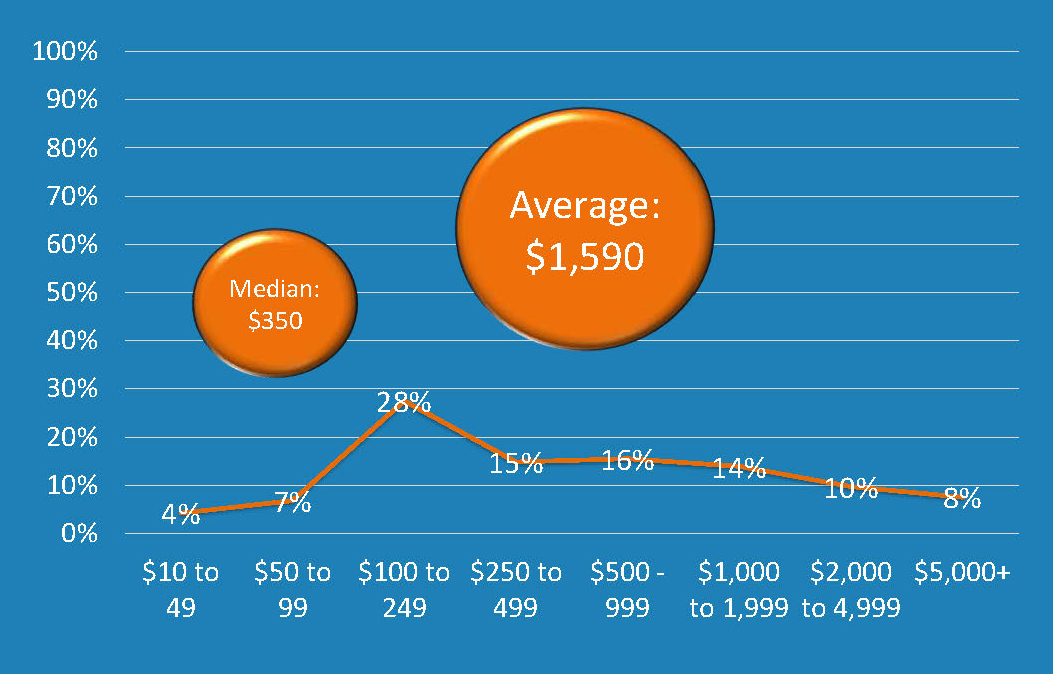
Annual giving among American donors varies widely. While a small share of donors give larger amounts, most give less than $500 in a year, resulting in an average gift amount that is much higher than the median. | Credit: “The Average American Donor: Far Less Generous Than They Think” by Grey Matter Research & Consulting
That gap between perception and reality is wide. Grey Matter found that donors overestimate their generosity by an average of 277%, with the median donor overestimating by more than double that margin. Only about one in eight donors actually underestimates how much they give. Women and donors who gave more than $1,000 were more likely to perceive their giving levels as higher than they were in reality.
For fundraisers, that perception gap matters. As the study put it: “If you think you’re already giving far more generously than you actually are, why would you consider increasing your generosity?”
Some Donors Know They Should Give More — and Still Don’t
Notably, donors themselves recognize the tension. Four in 10 say they believe they should give more than they currently do, including 11% who say they should give a lot more.
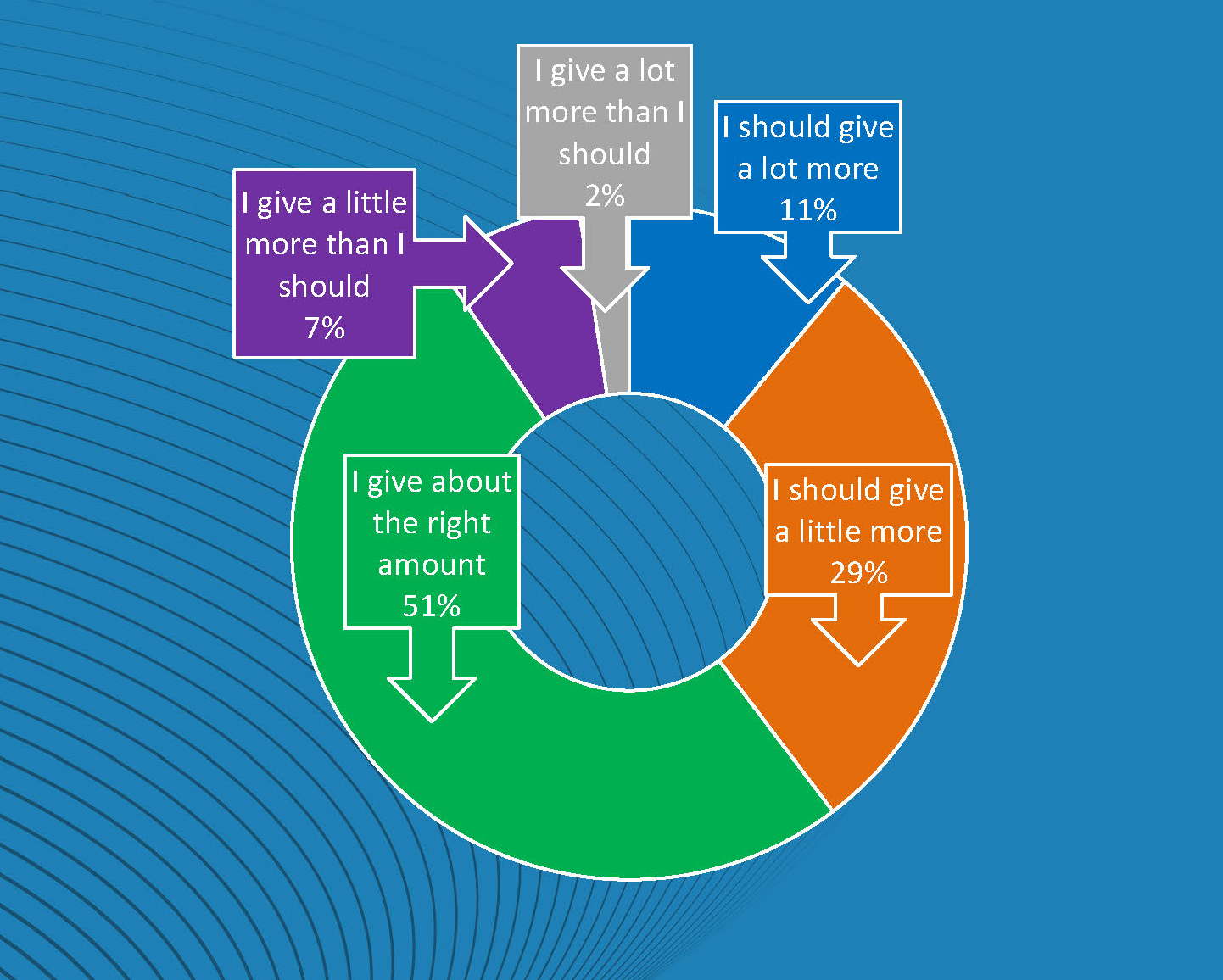
Four in 10 donors say they should give more than they currently do, while about half believe they give the right amount. | Credit: “The Average American Donor: Far Less Generous Than They Think” by Grey Matter Research & Consulting
Those giving less than 2% of household income are the most likely to feel this gap between intention and action. Asked why they do not give more, donors most often point to affordability and uncertainty about their financial future. But several other prominent concerns are areas nonprofits can directly influence with greater awareness, clarity, and motivation — including uncertainty about which organizations to trust, where a gift would make the greatest difference, and simply not thinking about giving.
Most Giving Doesn’t Feel Like a Sacrifice for Donors
Despite widespread concerns about financial pressure, relatively few donors describe their giving as truly sacrificial.
Only 6% of donors say their giving represents a significant financial sacrifice for their household. Another 54% describe it as a small sacrifice, while 40% say it involves no real sacrifice at all.
Even among donors who give 3% or more of their household income, sacrificial giving remains rare. Just 8% of those higher-percentage givers say their donations significantly affect their finances.
When asked what they would have done with their donation dollars if they had not given, nearly half of donors said they would have put the money into savings.
Most donors report having at least some discretionary income — enough for a few luxuries or extras beyond basic needs. While donors with greater financial comfort give more in absolute dollars, the research shows that generosity does not increase proportionally for most donors as income rises.
“Eighty-four percent of donors admit to having enough income for luxuries and extras, and two-thirds would have used their donated money for something other than bills or debt if they hadn’t given it away,” according to the report. “When they say, ‘I can’t afford it,’ most are really saying, ‘You’re not enough of a priority that I want to afford it.’ It’s your role to explore why you’re not a high enough priority for a larger gift.
- Categories:
- Accountability
- Individual Giving